Herbal Tea vs Green Tea: What’s the Difference?
Here is the content for your third blog post, designed to clarify a very common point of confusion for customers.
Blog Post Content
Title: Herbal Tea vs Green Tea: What’s the Difference and Which is Right for You?
Content Body:
Walk down the tea aisle of any store, and you’ll see countless boxes labeled “green tea” and “herbal tea.” Often, they are grouped together in our minds as simply “healthy hot drinks.” While both are wonderful for your well-being, they are fundamentally different beverages with unique origins, flavors, and benefits.
At Herbal Aarogyam, we believe that understanding what’s in your cup is the first step toward holistic wellness. Many of our customers ask, “Isn’t all healthy tea just green tea?” The answer is no.
Let’s break down the real difference between true tea and the vast world of herbal infusions.
1. The Source: The Defining Difference
The most significant difference lies in the plant itself.
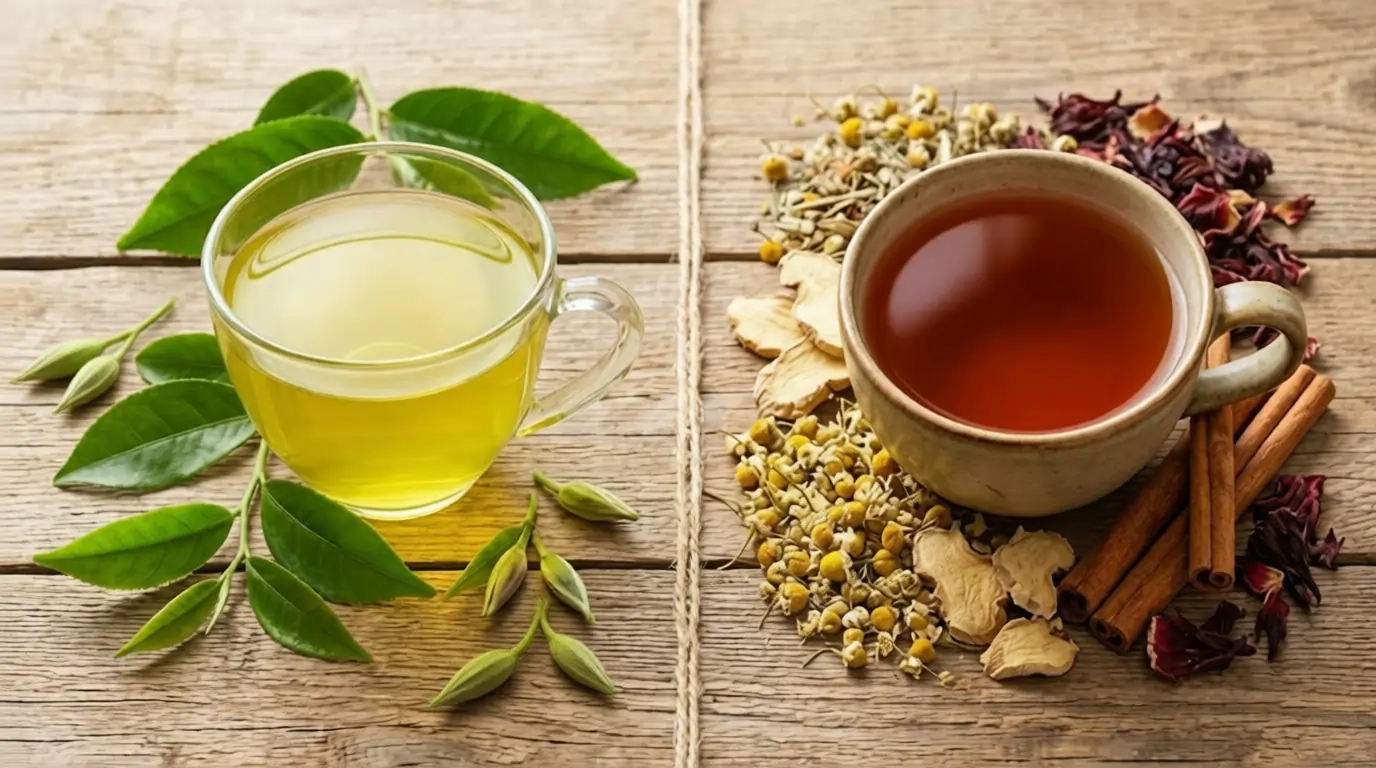
Green Tea: True “tea” (including black, white, and oolong) all comes from one single plant species: Camellia sinensis. Green tea is made from the unoxidized leaves of this plant. If it doesn’t come from Camellia sinensis, it’s technically not “tea” in the botanical sense.+2
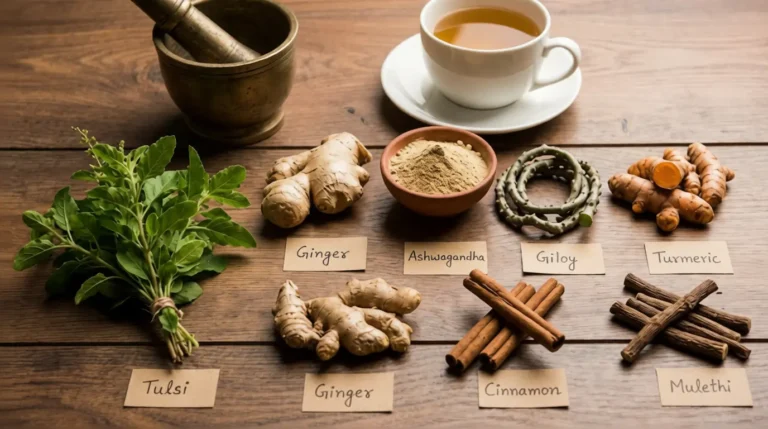
Herbal Tea: Herbal tea isn’t actually tea at all! The proper name for it is a “tisane” (ti-zahn). Herbal teas are infusions made from any other plant—this includes dried flowers, fruits, spices, roots, or herbs. Think peppermint, chamomile, ginger, tulsi, or turmeric.+1
2. The Caffeine Question
This is usually the deciding factor for many drinkers.
Green Tea: Because it comes from the Camellia sinensis plant, green tea naturally contains caffeine. While it generally has less caffeine than coffee, it still provides a gentle stimulant effect, making it great for morning focus.+1
Herbal Tea: With very few exceptions (like Yerba Mate), most traditional herbal teas are naturally 100% caffeine-free. This makes them the perfect choice for evening relaxation, soothing frayed nerves, or for those who are sensitive to stimulants.
3. The Health Benefits: Protection vs. Specific Healing
Both beverages are powerhouses of health, but they work in different ways.
Green Tea Benefits: Green tea is famed for its high concentration of antioxidants called catechins (like EGCG). It is widely studied for its ability to boost metabolism, support heart health, and provide protective cellular benefits.
Herbal Tea Benefits: The benefits of herbal tea depend entirely on the ingredients. They are often used for specific medicinal purposes.
- Ginger tea for digestion.
- Chamomile tea for sleep.
- Tulsi (Holy Basil) tea for immunity and stress relief.
- Peppermint tea to soothe an upset stomach.
Herbal teas are like nature’s diverse medicine cabinet.
Conclusion: Which Should You Choose?
There is no clear winner; it depends on what your body needs at that moment.
If you need a gentle mid-morning pick-me-up and a boost of long-term protective antioxidants, reach for a quality Green Tea.
If you need to unwind before bed, soothe a specific ailment like bloating or a cold, or want a flavorful drink without the buzz, an Herbal Tea blend is your best friend.
At Herbal Aarogyam, we specialize in harnessing the specific healing powers of herbs to create blends that nurture your body, mind, and soul, caffeine-free.